


If I had to learn how to code today from scratch, I’m not sure I would learn it properly.
Not because there aren’t enough resources.
But because there are too many shortcuts.
With AI tools everywhere, it’s never been easier to build apps without fully understanding what’s happening under the hood.
And honestly… that’s very tempting!
How I learned to code
My path was much more traditional:
- I started with a bootcamp to learn fundamentals
- Then I built projects to apply what I learned
- Then I gained real-world experience in a company
The first two steps were what got me my first job.
They gave me something more valuable than just code:
intuition, structure, and confidence.
The problem today
Learning to code today often falls into two extremes:
Too theoretical → you get stuck in tutorials
Too shallow → you ship things without understanding them
AI has amplified the second path.
You can now build fast…
but you might hit a wall later when things break, scale, or need to evolve.
My idea
So I decided to build something to explore this problem:
👉 A course generator that teaches coding through:
- hands-on project building
- coding fundamentals
- best practices
Not theory-heavy.
Not AI shortcut-heavy.
But something in between.
Building in public
Over the next few weeks, I’ll be sharing this journey publicly.
The goal is simple:
- experiment
- learn
- share everything along the way
I also plan to open-source the app once it’s ready so anyone can:
- run it locally
- learn from it
- build on top of it
There are no monetization plans or intentions here, this is purely an experiment.
Some interesting statistics
AI is making building software more accessible than ever.
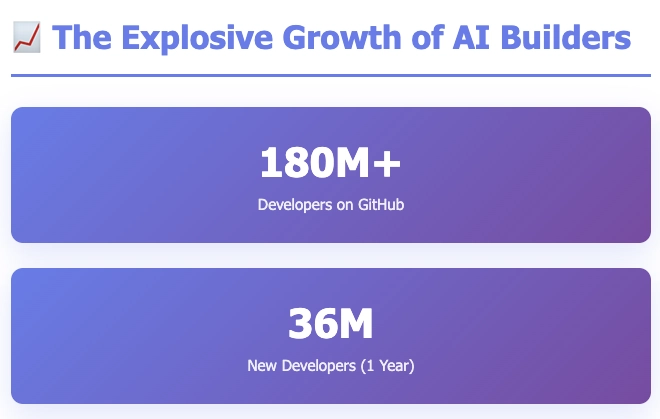
180M+ developers on GitHub with 36M new developers joining yearly.
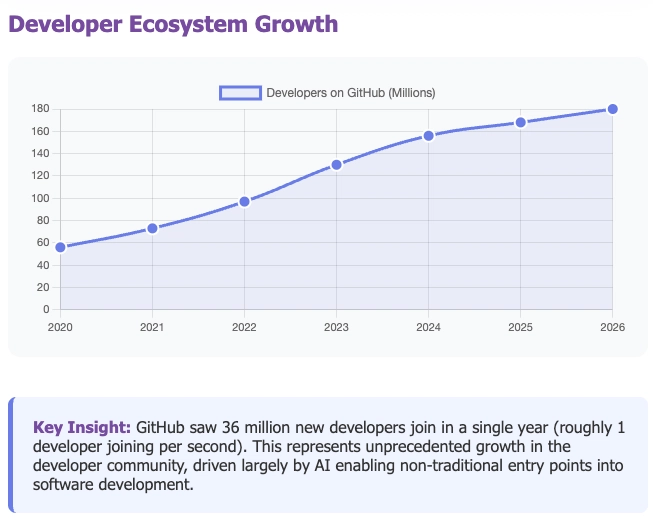
63% of Vibe Coders are Non-Developers.

Emerging concerns in Vibe Coding highlight that 40% of junior developers admit to deploying AI-generated code they don't fully understand.

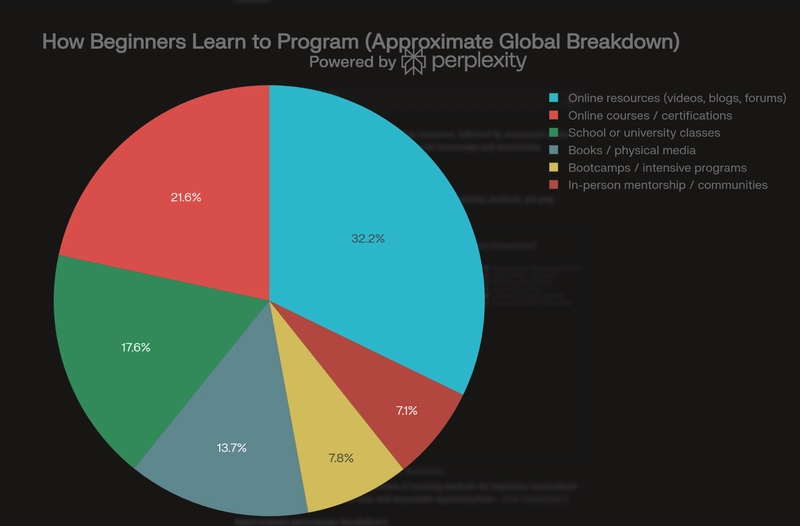
Stack Overflow’s 2024 survey finds 82% of developers use online resources as a primary way to learn.
Why this matters (to me)
I believe we’re entering a phase where:
The bottleneck is no longer building…
it’s understanding what you built
And that’s where fundamentals and best practices still matter.
My goal is to help:
- self-taught developers
- AI-assisted builders
- beginners who want to go beyond “vibe coding”
…develop stronger engineering intuition and build more sustainable products.
What’s next
In the next post, I’ll dive into:
- the technical setup
- early architecture decisions
- constraints for keeping this lightweight and accessible
Here is a sneak peek of the home page in the meantime!

Discussion
I’d love to hear your perspective:
- How are you currently learning or improving your coding skills?
- What’s your setup when building with AI tools?
- Would you use something like this? Why or why not?
Data Sources: GitHub Octoverse 2025, Gartner, JetBrains Developer Ecosystem, Course Report, Second Talent Vibe Coding Statistics, McKinsey AI Survey. Report generated with Perplexity on March 18, 2026.


Top comments (16)
Julien, I just have to say thank you for tackling this crucial issue. I've seen so many talented developers struggle to understand the fundamental principles of coding, and it's heartbreaking to see them build products that may not be as robust as they think. Your course generator sounds like an incredible tool, and I'm sending you all my best wishes, may your project be a huge success and may it bring about a new era of developers who truly master their craft!
Thanks Aryan! I really appreciate your support. And great that you are validating the pain point I am attempting to tackle.
Appreciate you for building something like this !!
Thanks Omaima! I also appreciate your kind words!
Wow! Great article! 🖖
Thanks David!
Love this approach! I have watched online video tutorials before but I struggle to get started with actual projects.
Thanks Nals! I understand that feeling, I also wasted a number of hours just blindly following online tutorials. With this project I want to bring tangible project scaffolding to the core with programming learning concepts built around.
Thanks for sharing the statistics, really very interesting! Looking forward to your building in public articles, I am a big fan of this approach 😊 Also very curious about the stack!
Thanks Marina! I will release the next post in the series next week which will reveal the stack! :)
great article, Julien :).
Thanks Benjamin :)
The gap you're describing — between "tutorial hell" and "vibe coding without understanding" — is exactly where most learning breaks down. I've seen developers ship entire features with AI assistance and then struggle to debug a simple null reference because they never built the mental model of how data flows through their own code.
One thing I'd push for in the course generator: make the AI explain rather than write. The most effective learning pattern I've seen is when the student writes the code and the AI acts as a reviewer or Socratic tutor — asking "why did you use a for loop here instead of map?" rather than just generating the answer. That keeps the cognitive load where it needs to be.
Looking forward to seeing how this shapes up. The build-in-public approach is great for something like this because the community can pressure-test the pedagogy in real time.
Thanks Nova for validating these concepts and sharing your perspective. And also for the words of support! I will have another post for this series coming this week normally.
Woah, amazing !
Wanna join hands? I recently started building an online platform for community management and lms both working together.
I believe collaboration between both platforms can make learning more effective,
I've been stuck about simulating the environment. If one wants to learn System Design, UI/UX or Marketing. How the simulated environment will work? I can't gather my thoughts in one place. I hope to collaborate with you sooner.
BTW, your project is freaking insane!
Thanks Ateeb for the support!
I like your project, interesting idea. It seems a trickier task to simulate environments for marketing and design vs coding where the latter can be very tangible with clear building blocks.
To be upfront, I am treaitng this project as an experiment and not looking at any collaborations or commitments at this stage. I am just building it freely and seeing it where it takes me and how the community responds, without any attachments.
Please do keep me updated with your project! Are you planning to post anything about it? If so, please share with me, I would be interested to read more about it.